
What leather we use?
🐄 Leather Structure Explained
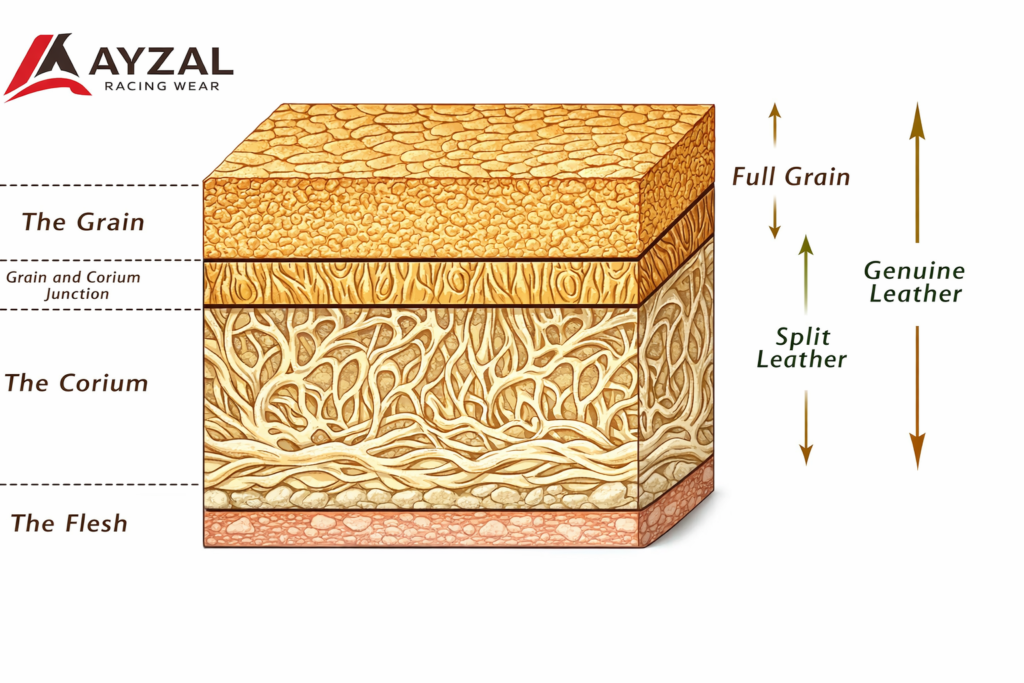
✅ 1️⃣ The Grain (Top Layer)
This is the outermost layer of the hide
Strongest and most durable part
Contains natural grain patterns
Used for Full-Grain & Top-Grain leather
👉 Best for racing suits because it’s tough and abrasion-resistant.
✅ 2️⃣ Grain & Corium Junction
Transition area between top grain and inner fibers
Adds strength and flexibility
Important for high-performance leather gear
✅ 3️⃣ The Corium (Middle Layer)
Thick layer with dense fibers
Gives leather its strength and structure
Often used to make split leather
✅ 4️⃣ The Flesh (Bottom Layer)
Soft inner part of the hide
Less durable
Usually removed or processed into suede
🏆 Leather Types from These Layers
🔥 Full-Grain Leather
Uses entire top grain layer
Strongest, most premium
Best for racing suits & safety gear
👍 Genuine Leather
General term for real leather
May include lower layers
Quality varies
⚠️ Split Leather
From lower corium layer
Less durable
Often used in cheaper products
🏍️ For Racing Gear
Full-grain or top-grain leather is best because:
✔ High abrasion resistance
✔ Strong fibers
✔ Long-lasting
✔ Better rider protection